
Anche quest’anno Pigment ha partecipato a Periferie Animate, il festival internazionale di cinema di animazione organizzato da Sinapsi Produzioni Partecipate.
Questa volta abbiamo potuto realizzare murales in forma condivisa con le studentesse e studenti in due istituti della provincia di Bari.
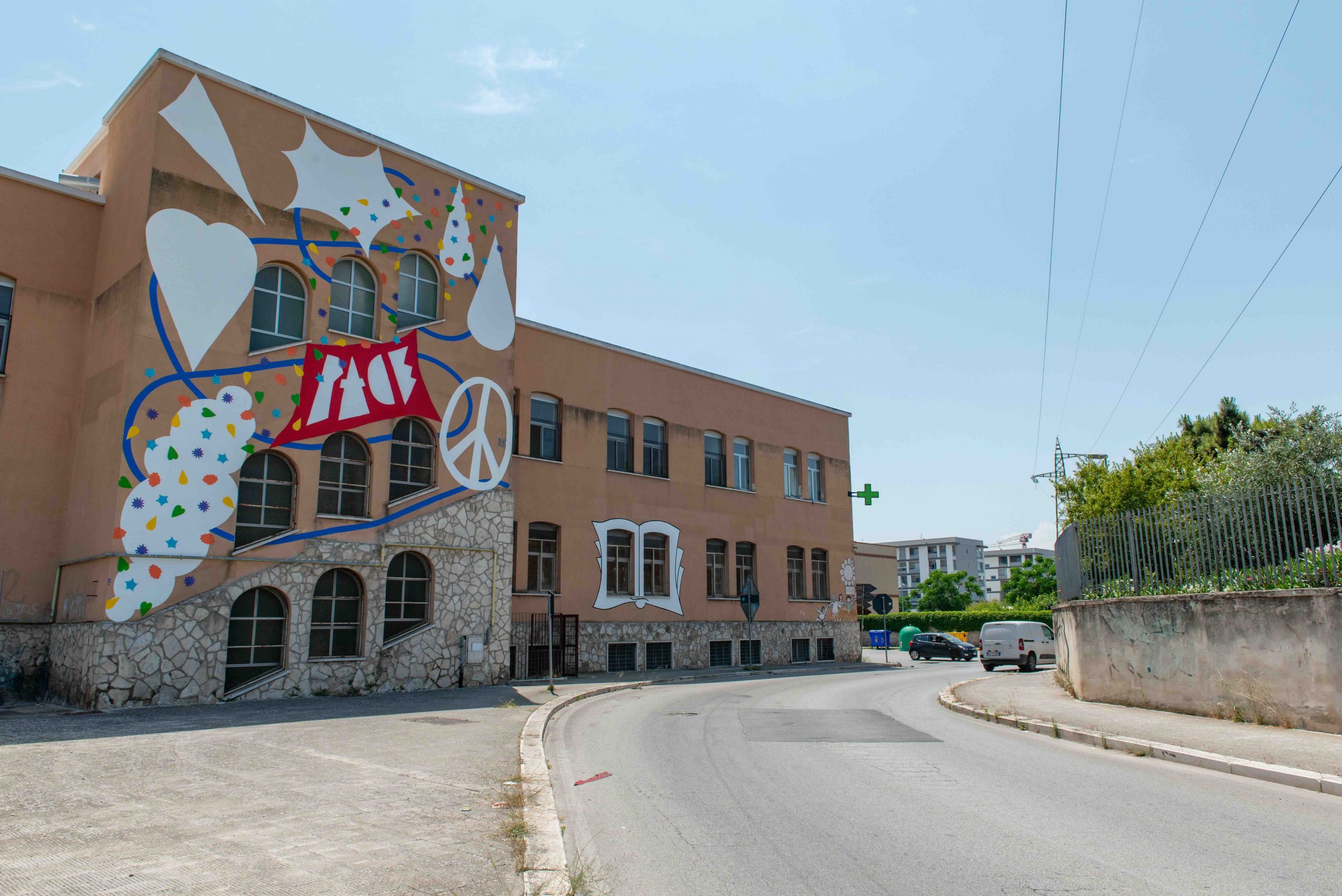
In particolare, nella scuola d’infanzia e primaria del quartiere Mungivacca, lo spunto è stato il semplice osservare e spiegare la storia del murales “Un vagone del treno della cultura” di Felice Pignataro, presente dal 1997 sui muri della scuola, e vero simbolo del quartiere.
A guidare il processo è stato Mario Nardulli, che ha spiegato come quel murales come tanti altri del Gridas vertevano sul tema della pace e della fratellanza dei popoli, e da qui ha proposto alle bambine e bambini una coprogettazione del murales partendo dalla lettura della poesia “Dopo la pioggia” di Gianni Rodari, inclusa nel libro “Filastrocche in cielo e in terra” disegnato da Bruno Munari:
Dopo la pioggia
Dopo la pioggia viene il sereno
brilla in cielo l’arcobaleno.
È come un ponte imbandierato
e il sole ci passa festeggiato.
È bello guardare a naso in su
le sue bandiere rosse e blu.
Però lo si vede, questo è male
soltanto dopo il temporale.
Non sarebbe più conveniente
il temporale non farlo per niente?
Un arcobaleno senza tempesta,
questa sì che sarebbe una festa.
Sarebbe una festa per tutta la terra
fare la pace prima della guerra.
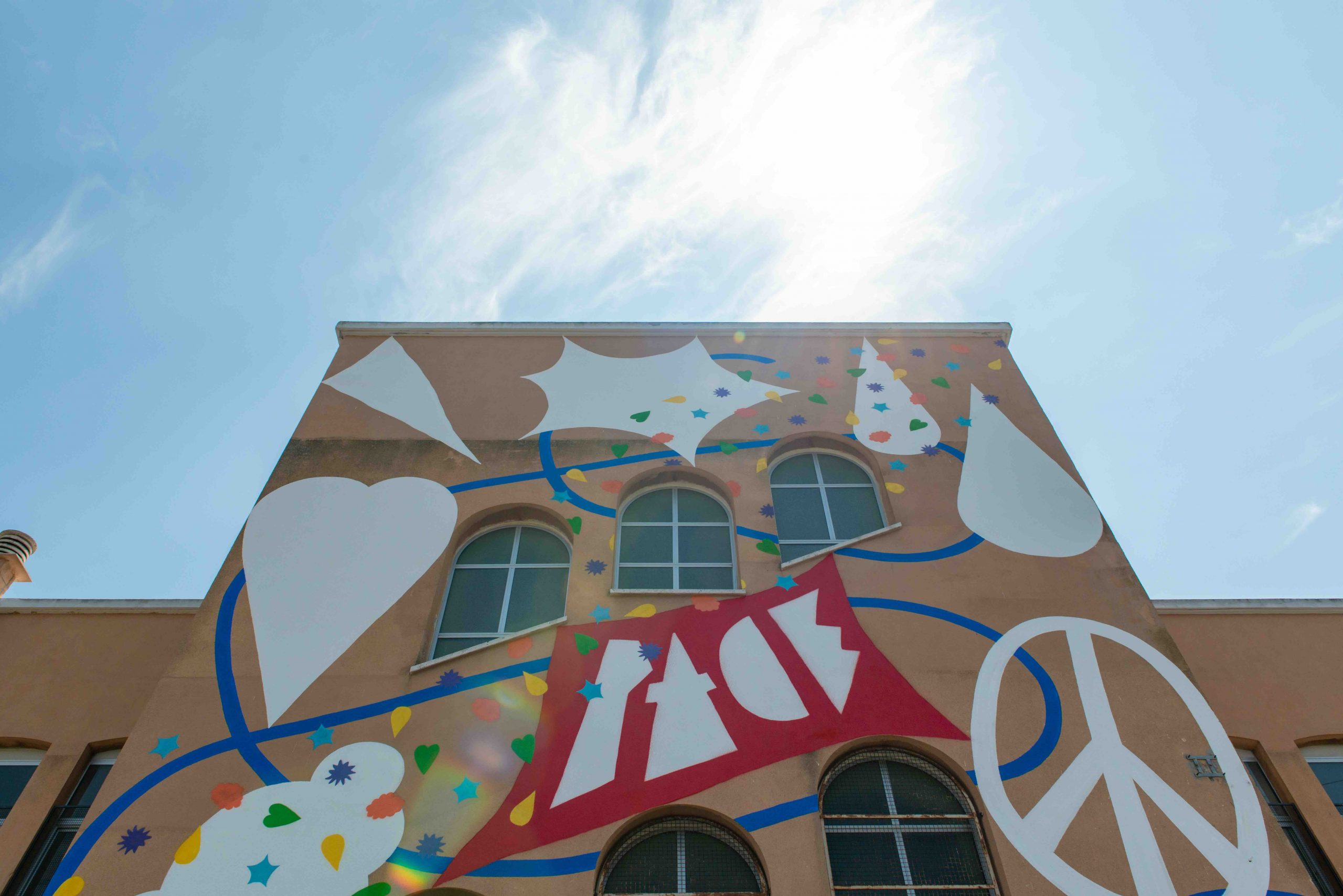
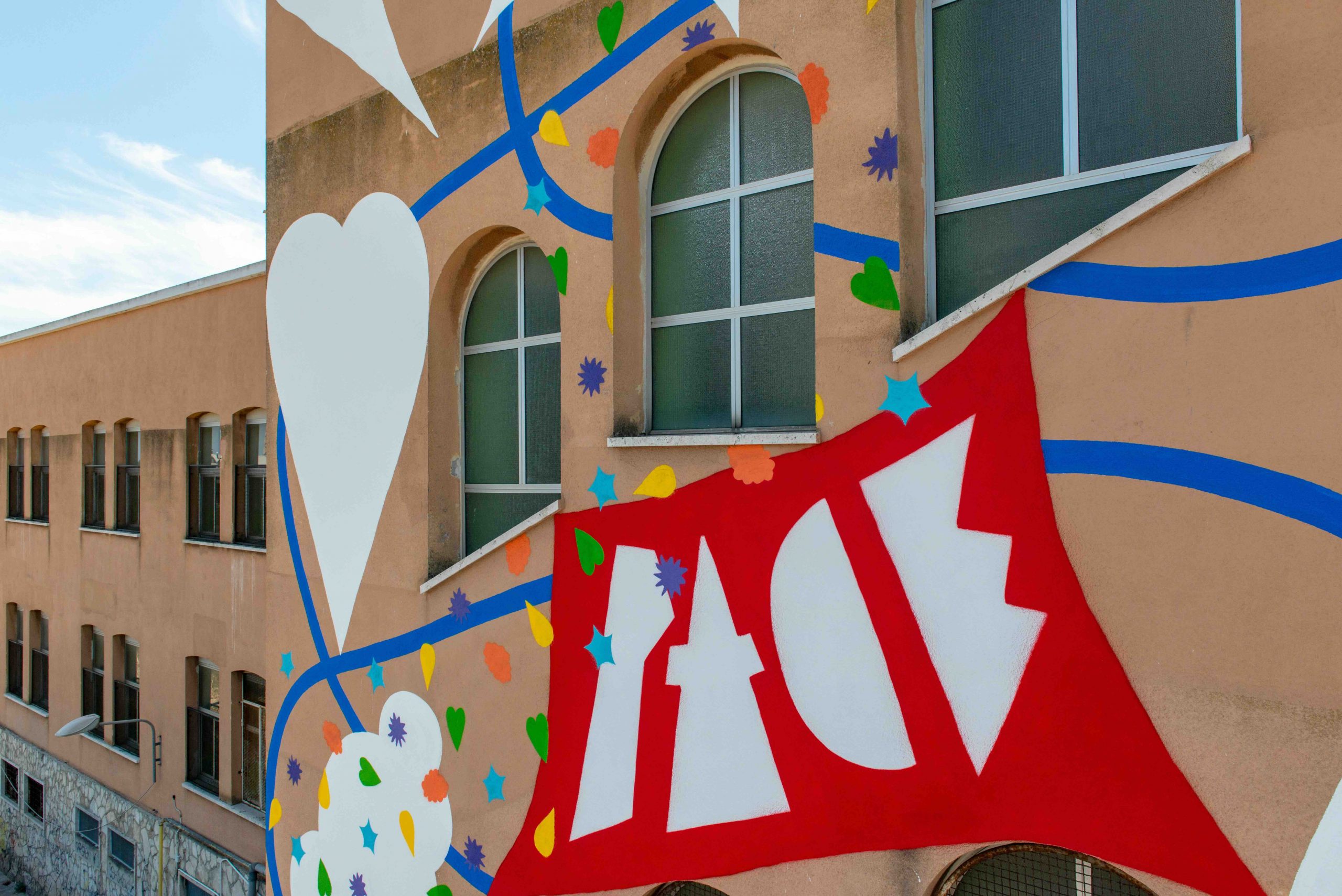
Ogni alunna e alunno hanno potuto immaginare liberamente come dipingere la parete più alta della loro scuola, provando a riportare gli elementi scelti da Rodari, per poi sintetizzarli per farne dei timbri linoleografici.
A questo punto, Nardulli ha potuto scegliere gli elementi più ricorrenti e particolari delle bozze per riportarli su parete, timbrando e realizzando a stencil i simboli scelti durante i laboratori.
Nuvole, pioggia, bandiere, stendardi, coriandoli, cuori e simboli della pace. Ispirandosi alla sintesi di Munari, il risultato è una valorizzazione dell’istinto grafico, capace di integrarsi ai murales pre-esistenti nella loro semplicità e solidità espressiva.
L’iniziativa è Sinapsi Produzioni Partecipate realizzata nell’ambito del Piano Nazionale Cinema e Immagini per la Scuola, Promosso da MiC e MiC e MiM, CIPS – CInema e immagini per la scuola.
L’artista ringrazia Julia Błaszczyk per l’assistenza, Vincenzo e Ilaria per la fiducia e Muflone per il supporto.




**** ENGL ****
Once again this year, Pigment took part in Periferie Animate, the international animated film festival organized by Sinapsi Produzioni Partecipate.
This time, we were able to create murals together with students from two schools in the province of Bari.
In particular, at the nursery and primary school in the Mungivacca district, the starting point was simply to observe and explain the story behind Felice Pignataro’s mural “Un vagone del treno della cultura” (A train carriage of culture), which has been on the school walls since 1997 and is a true symbol of the neighborhood.
The process was led by Mario Nardulli, who explained how that mural, like many others by Gridas, focused on the theme of peace and brotherhood among peoples. From there, he proposed to the children a co-design of the mural, starting with a reading of Gianni Rodari’s poem ‘Dopo la pioggia’ (After the Rain), included in the book ‘Filastrocche in cielo e in terra’ (Nursery Rhymes in Heaven and on Earth) illustrated by Bruno Munari:
After the rain
After the rain comes the clear sky
and the rainbow shines in the sky.
It is like a bridge decorated with flags
and the sun passes through it, celebrated.
It is beautiful to look up
at its red and blue flags.
But you can see that this is only possible
after the storm.
Wouldn’t it be better
not to have the storm at all?
A rainbow without a storm,
that would be a celebration.
It would be a celebration for the whole earth
to make peace before war.
Each student was free to imagine how to paint the highest wall of their school, trying to reproduce the elements chosen by Rodari, and then synthesizing them to make linoleographic stamps.
At this point, Nardulli was able to choose the most recurring and distinctive elements from the drafts to reproduce them on the wall, stamping and stenciling the symbols chosen during the workshops.
Clouds, rain, flags, banners, confetti, hearts, and symbols of peace. Inspired by Munari’s synthesis, the result is an enhancement of graphic instinct, capable of integrating with the pre-existing murals in their simplicity and expressive solidity.
The artist would like to thank Julia Błaszczyk for her assistance, Vincenzo and Ilaria for their trust, and Muflone for their support.


